Expanding and Raising Prices at Once — What Is Consuming instax Film Is Not a Film Camera
The expansion has an address: Minamiashigara, Kanagawa.
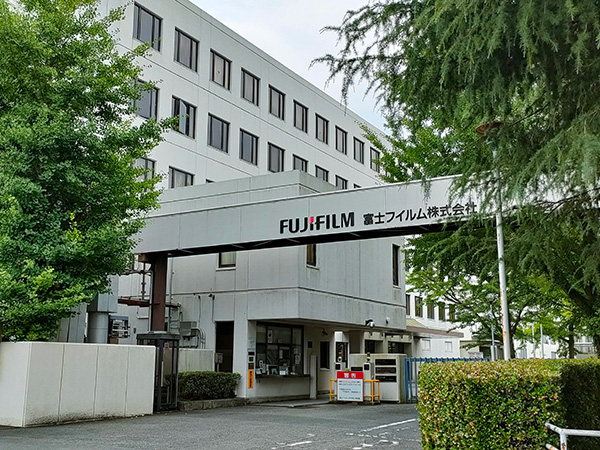
On 18 December 2025, Fujifilm announced an investment of about ¥5 billion to expand instax film production at this site. Operation was to begin in stages from spring 2026, reaching full operation from autumn 2026 onward, at which point capacity would be about 10 percent above the 2025 fiscal year1.
A note first. I have used neither instax cameras nor printers nor film, and I have not checked shop prices in person. What follows is an ordering of published material.
Three times, about ¥11.5 billion
This was not a one-off.
Fujifilm invested about ¥2 billion in 2022, about ¥4.5 billion in 2023, and about ¥5 billion in 2025, all in instax film production facilities. That comes to about ¥11.5 billion in total, and roughly 50 percent more capacity than in the 2022 fiscal year1.
The reason given is "expanding global demand," with cumulative instax unit sales passing 100 million by the end of the 2024 fiscal year2.
Three rounds in three and a half years. Capacity rises with each one, and then it expands again.
In the same year, prices went up
Meanwhile, on 31 March 2026, Fujifilm Imaging Systems announced a domestic price revision, effective 1 April 2026. The revisions against shipment prices were as follows3.
| Product | Revision |
|---|---|
| Instant film, mini | about 22–27% |
| Instant film, SQUARE | about 8–22% |
| Instant film, WIDE | about 3–13% |
| Single-use camera "Utsurundesu" 135 | about 5% |
The stated reason: with prices of materials and transport costs rising, the company had worked to absorb costs through production efficiency and expense reductions, but absorbing them through its own efforts alone had become difficult3.
Capacity up roughly 50 percent against 2022, and the best-selling mini film up more than 20 percent. You might expect unit costs to fall as volume rises. They have not. The reason for the expansion and the reason for the price rise sit on different layers.
The cause the company itself once named
There is one document that helps read this structure. It is from 2022, not 2026.
In autumn 2022, instax film ran short. According to a report in Josei Jishin on 15 November 2022, retailers imposed limits such as three boxes per customer, a case of thirty rolls that had cost about ¥36,000 in spring was being resold for over ¥80,000 by November, and single boxes that normally went for ¥1,200 were passing ¥1,5004.
Fujifilm commented at the time that it had "added a production line, coming into operation in stages this month," and that capacity would rise "by up to 20 percent." The cause it gave for the shortage was these two products4:
- instax mini Evo (released December 2021)
- instax mini Link 2 (released July 2022)
The first is a hybrid camera that shoots digitally and prints what you select; the second prints images from a smartphone.
By the company's own account, then, what drove film consumption was not a vogue for film cameras. It was not machines for taking pictures but machines for putting existing images onto paper.
From machines that take to machines that output
That line continues.
On 15 September 2026, Fujifilm announced the instax Pal 2 and the instax Link WIDE 2 on the same day, both going on sale on 9 October 20265.
Listing specifications would not help, so only the difference in design. The instax Pal 2 is built purely for shooting and does not print in the body. Images go over USB or Bluetooth to an app, and are put on paper by an instax Link printer or an Evo-series hybrid. You choose between mini, square, wide and frameless when shooting, and can specify the format again at the printing stage5.
Shooting and printing are separate steps.
The instax Link WIDE 2 is the successor to the instax Link WIDE, a smartphone printer released in October 20215.
The mini Evo in 2021, the mini Link 2 in 2022, the Pal 2 and Link WIDE 2 in 2026. The products growing under the instax name form a line of output devices more than of cameras. The film being expanded at Ashigara is film for that output.
Trying to explain this as "film has come back" loses sight of it. On the company's own account, at least, the people consuming this film are not only the people shooting film.
What the financials cannot separate
What about the numbers?
At Fujifilm Holdings, imaging segment revenue for the fiscal year ended March 2026 was ¥485.7 billion, up 13.8 percent year on year. For Q1 of the year ending March 2027 (disclosed 6 August 2026), it was ¥168.8 billion, up 16.2 percent, with operating profit of ¥43.4 billion, up 3.9 percent6.
Revenue up 16.2 percent against operating profit up 3.9 percent. It is tempting to read rising material and transport costs, or the effect of the April price revision, into that gap.
It cannot be done. The disclosures break out neither instax unit volumes nor instax margins6. The imaging segment contains more than instax. Carving instax out of the segment figures to assert a cause would go past the evidence.
What can be written is that the segment as a whole shows a gap between revenue growth and operating-profit growth.
What has not been confirmed
Whether the full operation promised for "autumn 2026 onward" has happened cannot be confirmed. No follow-up release could be found. That is precisely the current moment, so a question to the press office would settle it.
No independent reporting on a shortage in 2026 could be found. Everything on shortages here rests on the 2022 article, which says nothing about current stock or shop prices. Japanese pages addressing "instax shortage" are mostly personal blogs and retailer round-ups, which are not usable as sources.
Material on film being handed to people as prints also comes only from Fujifilm's own announcements. The instax Biz app for businesses and the experience booths at events are examples the company presents, not independent reporting. Without approaching the venues and shops actually using them, that layer is unsupported.
And I have never used this film. Not the texture of the paper, not the speed at which the image comes up, not what it feels like to spend one frame after a price rise.
How this sits with earlier articles
instax has never been treated head-on here before. Among existing articles the name appears only in the piece on peel-apart film, and even there only as a compatibility note and an alternative — "it does not simply fit a Type 100 camera," "current instax or Polaroid integral film is the more direct choice."
It shares a premise with the piece questioning the "revival" narrative. Nothing here indicates that interest in film photography itself has returned.
It runs the opposite way from the piece on shrinking options for black-and-white developing. That one is material infrastructure contracting; this one is three rounds of investment expanding it. But what is expanding is not the darkroom. It is the route from a phone to a sheet of paper. Both concern the material of photography, and they are heading in different directions.
Neither is the more properly photographic. But if you want to know what is happening when the price of a box goes up, the production line at Ashigara and the April revision rates will tell you faster than a new camera will.
Sources
- Expanding production facilities for instax™ film — Fujifilm (18 December 2025)
- Notice of price revision — Fujifilm Imaging Systems (31 March 2026)
- instax Pal 2 — Fujifilm (15 September 2026)
- instax mini 13 — Fujifilm (16 April 2026)
- instax cumulative sales pass 100 million units — Fujifilm
- Q1 FY2027/3 results presentation — Fujifilm Holdings
- instax film shortage and resale at double the price — Josei Jishin (15 November 2022)
- What peel-apart film can still do
- How far to believe in the compact camera "revival"
Footnotes
-
Fujifilm, "Expanding production facilities for instax™ film" (18 December 2025). The roughly ¥5 billion investment, the Ashigara site of the Kanagawa Factory (210 Nakanuma, Minamiashigara, Kanagawa), staged operation from spring 2026 and full operation from autumn 2026 onward, capacity after full operation about 10 percent above FY2025, the prior investments of about ¥2 billion in 2022 and about ¥4.5 billion in 2023 for a cumulative figure of about ¥11.5 billion, and roughly 50 percent more capacity than FY2022, are all from this release. As of 18 September 2026, no follow-up release reporting that full operation had been reached could be found. ↩ ↩2
-
Fujifilm news release. Cumulative instax unit sales passing 100 million by the end of FY2024 is from this release. ↩
-
Fujifilm Imaging Systems, "Notice of price revision" (announced 31 March 2026, effective 1 April 2026). Revisions against shipment prices: instant film mini about 22–27 percent, SQUARE about 8–22 percent, WIDE about 3–13 percent, and the single-use camera "Utsurundesu" 135 about 5 percent. The quoted reasoning is also from this notice. What is treated here is the revision to shipment prices, not shop prices, which vary by period, region and retailer. ↩ ↩2
-
Josei Jishin, "instax film shortage, resold at double the price… FUJIFILM: 'added a line, in operation in stages this month'" (published 15 November 2022, updated 16 November). The purchase limits, the price trajectory for a thirty-roll case, the per-box prices, Fujifilm's comments ("added a production line, coming into operation in stages this month," "capacity up by up to 20 percent"), and the explanation naming the instax mini Evo (released December 2021) and instax mini Link 2 (released July 2022) as the cause of the shortage are all from this article. This is a 2022 article and does not describe supply and demand in 2026. No independent reporting on a 2026 shortage could be confirmed. ↩ ↩2
-
Fujifilm, "instax Pal 2" (15 September 2026), and the instax Link WIDE 2 announced the same day. Both go on sale 9 October 2026. That the Pal 2 is built for shooting and does not print in the body, that images are sent over USB or Bluetooth to an app and output on a Link printer or Evo-series hybrid, that mini, square, wide and frameless can be chosen when shooting, and that the Link WIDE 2 succeeds the instax Link WIDE released in October 2021, are all from these releases. This article is not a specification list or a purchase recommendation, so prices and bundled items are not covered. The writer has not handled either machine. ↩ ↩2 ↩3
-
Fujifilm Holdings Q1 FY2027/3 results and presentation materials (disclosed 6 August 2026), together with FY2026/3 results. Imaging segment revenue was ¥485.7 billion in FY2026/3 (up 13.8 percent year on year) and ¥168.8 billion in Q1 FY2027/3 (up 16.2 percent), with operating profit of ¥43.4 billion (up 3.9 percent). The materials do not disclose instax unit volumes or margins, so the gap between the segment's revenue growth and operating-profit growth cannot be attributed to instax. ↩ ↩2