Generative AI Is Out, but Gold Leaf and Wet Plate Are In — Where RPS Draws Photography’s Boundary
A botanical photograph is printed on thin kōzo paper, then covered in places with gold leaf. Elsewhere, a metal plate receives an image through the nineteenth-century wet-plate collodion process and is washed in water from the river beside the place where it was made. Another series alters Polaroids with saltwater and eye drops.
All of these works entered the Royal Photographic Society’s International Photography Exhibition 167. Its entry FAQ, however, says that work containing generative AI in whole or in part is not eligible.
This is not a simple story in which old techniques are welcome and new ones are not. The first round for IPE 167 took JPEG files online, and manipulation with editing software was permitted. RPS did not divide analogue from digital, or untouched images from altered ones. What, then, did it divide?
Scope of this article
I have not seen the exhibition, which opened at Saatchi Gallery in London on August 7, 2026. This is a pre-visit note based on RPS’s official pages and entry rules, together with a published exhibition preview. It does not assess print surfaces or the installation in the gallery.
Details of the processes and the September 11 closing date come from Digital Camera World. RPS’s own pages confirm 48 exhibitors in the 167th edition and the August 7 opening. Public pages count the works differently, so I do not give a total number of photographs here.
The door the rules open—and the one they close
Placed side by side, the IPE 167 FAQ makes the boundary visible.
| Item | IPE 167 treatment |
|---|---|
| Genre, process, technique | No restrictions; all approaches to photography are eligible |
| Editing and manipulation | Editing software is permitted; entrants must disclose changes to authenticity in genres where documentary fidelity matters |
| First submission | JPEG, sRGB, no more than 10 MB, submitted online |
| Final selection | Shortlisted entrants send prints for selection at RPS |
| Generative AI | Work containing it in whole or in part is ineligible |
RPS does not prohibit intervention in an image. It leaves room to alter colour and composition after exposure and keeps the entrance open to a wide range of techniques. It then names generative AI alone and closes that door.
What gold leaf and wet plate make visible
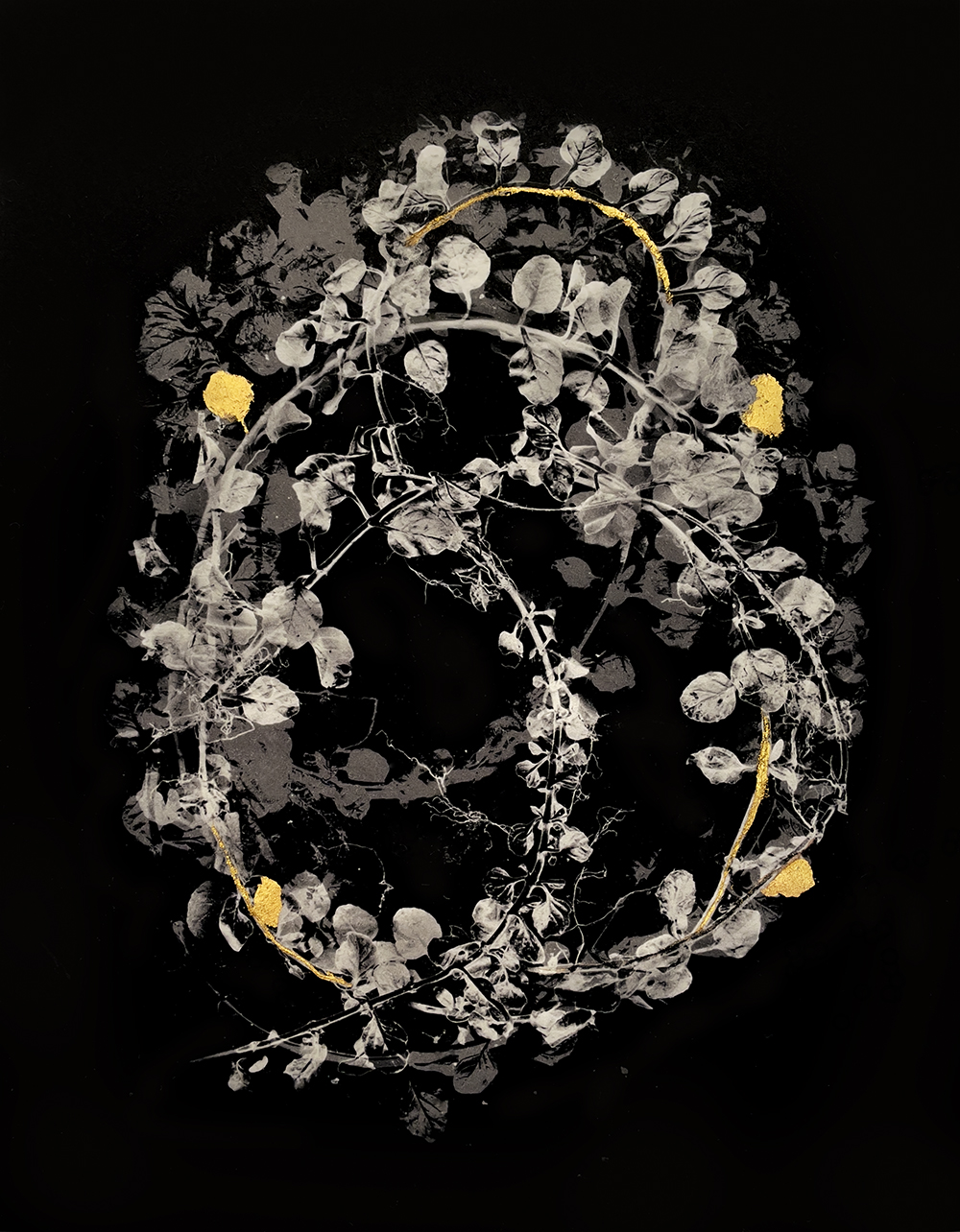
One of the most striking works in the preview is Marcy Palmer’s Seeds of Strength and Resilience. Palmer photographs plants with medicinal histories, prints them on kōzo paper, and applies gold leaf. RPS’s awards page explains that the work addresses the history and present state of reproductive rights; Digital Camera World reports the use of kōzo and gold leaf.
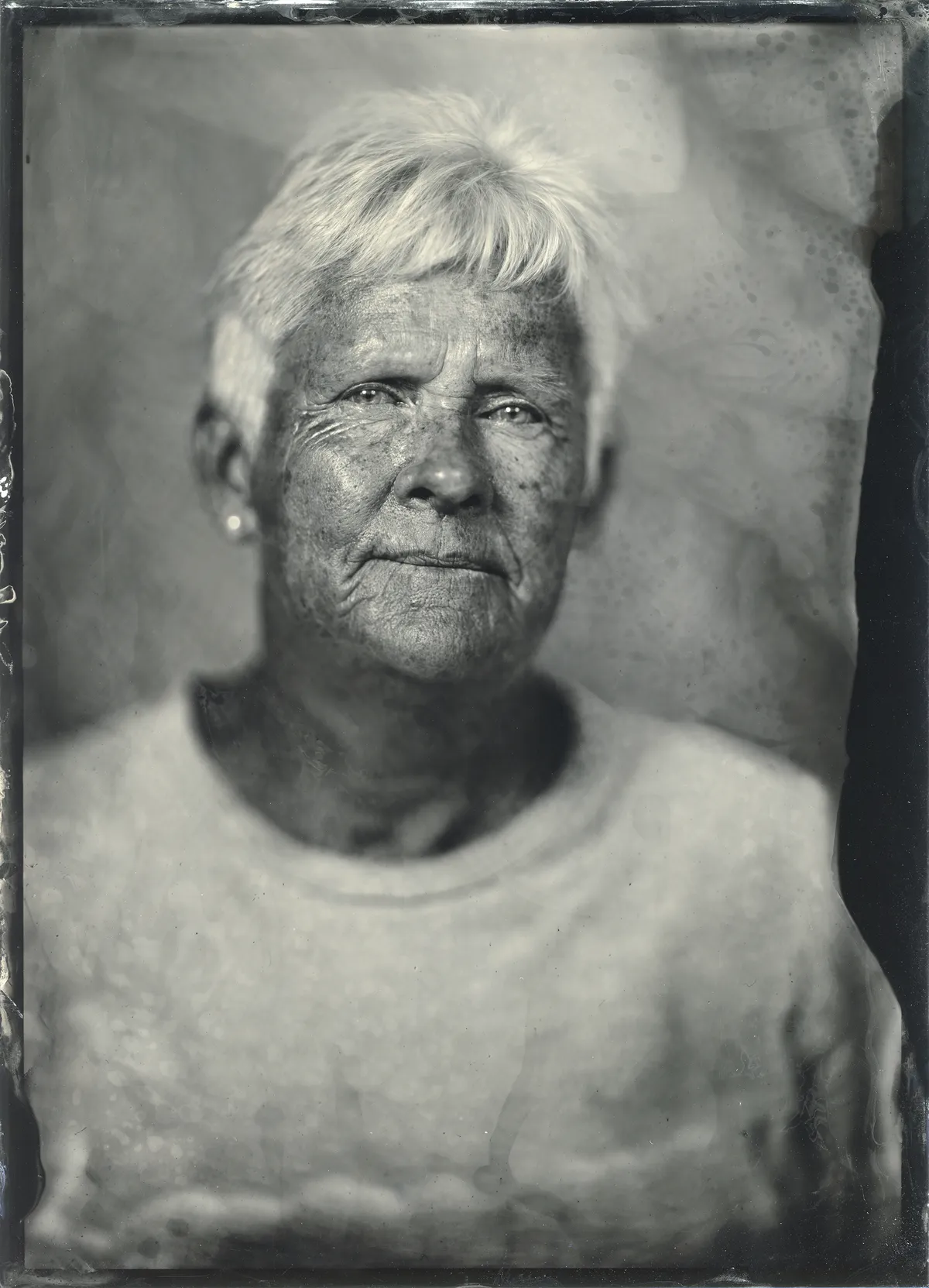
Abbey Hepner used wet-plate collodion to portray residents of Uravan, Colorado, a former uranium-mining town that was later erased. According to the preview, she washed the plates in water from the river that still runs beside the buried town. The historical process is not used merely to suggest nostalgia. It returns matter from the place to the image.
In Siân Cann’s Retinopathy Forest, saltwater and post-operative eye drops alter Polaroids to approach the visual disturbance of retinopathy. The preview also mentions motion-picture film and thermal imaging.
Gold leaf is not something the camera recorded as light. Corrosion by saltwater was not present when the shutter was released. What RPS accepts is therefore not an image completed by light alone, but a made object that may include exposure, support, chemistry, and physical handwork.
“Recorded by light” is not enough
It is possible to call the exclusion of generative AI a boundary between a photograph recorded by light and an image generated by a model. That description, however, cannot account for the gold leaf or saltwater.
The rules point instead toward a practical question: can the steps between maker and image be traced as the entrant’s own work? The wet-plate chemistry, river water, kōzo paper, and gold leaf all have sources and uses that can be described as part of the process. Manipulation in editing software is likewise treated as a judgment that the entrant applies to their own image.
Generative AI introduces fragments of images the maker did not photograph between training data and output. Even when it is used on only part of a picture, the visual origin of those pixels cannot be returned simply to the photographer’s actions. For IPE 167, even that small break in continuity makes a work ineligible.
This is not a general claim that generative work has no author. Prompting, selection, iteration, and editing all involve judgment. We can say only that RPS did not accept those judgments as sufficient eligibility for this particular photographic exhibition.
RPS does not speak with one settled definition
The IPE 167 FAQ and the RPS AI policy to which it links do not say exactly the same thing.
The linked “Interim AI principles,” dated June 19, 2023, treats the creation of new elements at pixel level as a move from photography toward illustration. Yet it disallows images produced entirely by AI or containing AI-generated “material elements.” It also accepts algorithmic processing—including cloning backgrounds and removing subjects—as an extension of long-standing editing under the photographer’s control.
The document explicitly says it applies for the remainder of 2023. The IPE 167 FAQ is stricter: any whole or partial use of generative AI is prohibited.
The two public texts should not be tidied into a single finished definition that RPS itself has not published. What can be verified is that IPE 167 used the stricter line, and that RPS has acknowledged both the difficulty of detecting AI-derived content and the need for transparency and continuing discussion. This looks less like an eternal definition of photography than a temporary embankment built to keep judging workable.
Even in 2026, institutions draw different lines
At the Asama International Photo Festival, discussed in this article on “After the Image”, ARCHIVES’ fully AI-generated Vanitas🥺 is shown alongside Aphic’s After Walker Evans 2, made by generating more than ten thousand Walker Evans-like images with Stable Diffusion and selecting from them.
Asama does not expel these works from photography. It places them beside camera-made images and makes the boundary itself part of the exhibition. RPS excludes them at the entrance to an open call. Declaring one institution correct in advance tells us little. The former can exhibit the boundary as a question; the latter must standardize eligibility for anonymous judging. A line changes function when the exhibition’s purpose changes.
The question of who receives proof of authenticity also connects to the Canon Authenticity Imaging System article. RPS separates generated work at entry; Canon’s system is meant to make provenance at capture verifiable later. One concerns eligibility and the other evidence, but both transfer the link between maker and image into an institutional system.
What I would look for in the gallery
In person, I would pay less attention to guessing which works look “old” or “new” than to how the captions describe their processes.
How does gold leaf change the light on a photograph? Do the scars and unevenness of wet plate appear bound to Uravan’s history? How much of the maker’s visual experience reaches us through the damaged Polaroids? And while these forms of handwork are carefully disclosed, does the exhibition explain to visitors why generative AI is absent at the door?
I cannot answer those questions yet. The FAQ shows the boundary, but only the physical exhibition can show what that boundary feels like among the works on the wall.
From the rules alone, I do not see a line defending old photography or unaltered photography. I see an emphasis on the ability to return a work to an account of what its entrant did, with which materials, and by whose hand. For viewers who value that continuity, IPE 167’s position will be legible. For those who regard movement between generation and capture as part of photography’s present, it will feel too narrow.
Technology does not draw photography’s boundary by itself. Faced with the same image environment in 2026, these two exhibitions have built different entrances.
Sources
- RPS: International Photography Exhibition 167 — 167th edition, 48 exhibitors, and an outline of selection, checked August 11, 2026.
- RPS: IPE 167 Entry Guide and FAQs — process restrictions, generative AI, editing and manipulation, and submission format, checked August 11, 2026.
- RPS: IPE 167 Awards — award recipients and the August 7, 2026 opening, checked August 11, 2026.
- RPS: Interim AI principles — the 2023 distinction between generative AI and algorithmic processing, and the document’s interim status, checked August 11, 2026.
- Digital Camera World: Saltwater, gold leaf and 19th-century chemistry — exhibited techniques and the Saatchi Gallery dates, checked August 11, 2026.