Reading Photobooks Again — A Map of New Books, Classics, Embodiment, and Japanese Photo History
When you watch videos about photobooks, it is easy to receive them as shopping lists.
That can be enjoyable too. But once books are arranged only by price, rarity, or resale heat, part of what makes them meaningful becomes harder to see.
One book can be an entrance into a photographer, but also an entrance into an era.
Some books lead into the body through fashion photography. Others lead into Japanese photo history through broken fragments of the city. New publications can be entered lightly; classics ask for a different pace and a different kind of return.
This note reorganizes the photobooks introduced or mentioned across two video transcripts.
The goal is not to rebuild a ranking of what sells. It is to make visible which book becomes an entrance into which way of seeing.
Premise
This article is based on two video transcripts and on public information that could be checked through publishers, bookstores, archives, and other open sources.
It is not a full first-hand review based on having physically read every book listed here. Because transcript text can collapse names and titles, I separate books whose titles could be confirmed from references where only the artist name is clear.
Prices and availability also change. This is not meant as a market guide or a buying order, but as a reading map for photobooks.
The Short Answer
The books at the center of this map can be grouped into five broad shelves.
-
New or recent books that are easy to enter through
Valerie Phillips, Todd Hido, Petra Collins, and others. These arrive as current publications and carry the freshness of a contemporary entry point. -
Books to return to as photobook classics
Robert Frank, Henri Cartier-Bresson, Martin Parr, Wolfgang Tillmans, and others. These often function as reference points in photo history and photobook culture. -
Books near embodiment, desire, and fashion
Richard Kern, Guy Bourdin, Bruce Weber, Sarah Moon, and Sakiko Nomura. These become entry points into the unstable border between beauty, unease, commercial image-making, and private looking. -
Books for reading Japanese photo history and the Provoke orbit
Masahisa Fukase, Daido Moriyama, The Japanese Box, Takuma Nakahira, Nobuyoshi Araki, and others. These are ways into reading photography not as isolated masterpieces but as editing, printing, private life, and the texture of a historical moment. -
Names that appear, but whose exact titles remain unconfirmed
Joel Sternfeld, Sophie Calle, Cindy Sherman, Diane Arbus, Nan Goldin, and others. These are left not as core entries in the article, but as artists to trace next.
A cover-led starting point
Amazon product pages often shift as editions and stock change. So here, the images use public thumbnails from publishers and bookstores, while the links point to Amazon search results. It is a small guide for readers who want to move through the shelf by the temperature of the covers first.
| Photobook | Cover |
|---|---|
| Valerie Phillips, Candy Cat Head Search on Amazon | 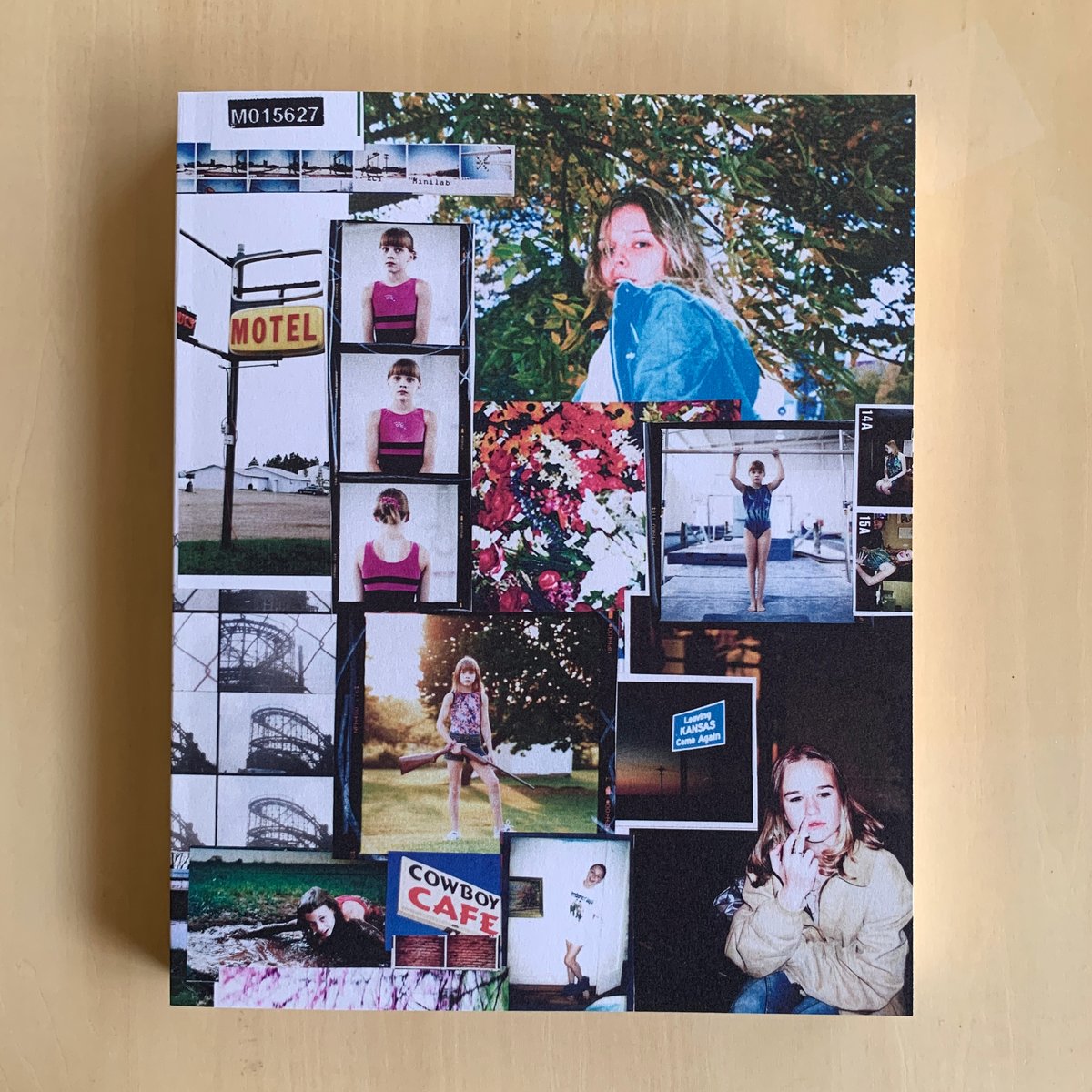 |
| Petra Collins, STAR Search on Amazon | |
| Masahisa Fukase, Yoko Search on Amazon |  |
| Daido Moriyama, DAIDO SLIDE Search on Amazon |  |
| EIKOH HOSOE by Yasufumi Nakamori Search on Amazon | 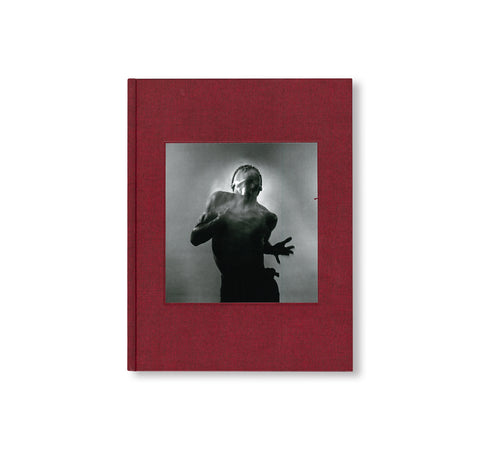 |
| Masumi Ishida, light years Search on Amazon |  |
| The Japanese Box Search on Amazon |  |
New or recent books that are easy to enter through
Valerie Phillips, Candy Cat Head
Valerie Phillips's Candy Cat Head can be picked up as one of the clearer recent-entry books in the transcripts. The transcript text is unstable around the title, but the surrounding description and the public product page make this identification plausible.
Phillips's photographs do not mainly work as polished portraits. They carry nearness, youth, and the slightly messy air of everyday life. What matters here is not describing the subject cleanly, but preserving the temperature of a relationship.
As an entrance into photobooks, this is less a book for studying the canon than for entering photobooks through a current sensibility. The pictures arrive lightly, closely, and at a private distance. For readers who do not want to begin on the heavy shelf of photo history, that matters.
Todd Hido, Intimate Distance
Todd Hido's Intimate Distance: Over Thirty Years of Photographs, A Chronological Album appears in the videos as a revised and expanded edition. The LFI introduction also describes the Aperture edition as a chronological view across more than thirty years of work.
Hido is often remembered through houses at night, car windows, fogged glass, and suburban stillness. Nothing fully dramatic needs to happen in the frame; the photographs can look like something has just happened, or is about to happen. That suspended mood is part of their strength.
This book works as an entrance into following a photographer across time rather than only encountering a few isolated signature images. It is less about one unforgettable frame than about watching the same unease return in altered forms. The fact that it appears near the top of the video's sales conversation also suggests that Hido still exerts a strong pull on present-day readers.
Petra Collins, STAR
Petra Collins's STAR is introduced as a recent title with a relatively open entrance for younger readers. Google Books and other public information also support the reading of the book as one built around a fictional pop star and fan culture.
Collins works close to the territories of photography, fashion, music, and self-performance after the internet. In that sense, the photobook becomes less a record of reality than a stage built from stardom, desire, spectatorship, and the gaze of fandom itself.
Readers trained on older photobook canons may be tempted to take such work lightly. But if the question is how image culture works now, a photobook about pop-star construction and fan vision is not secondary. Photography is not only about depicting someone. It is also about producing the conditions under which someone is seen.
Books to return to as classics
Robert Frank, The Americans
Robert Frank's The Americans remains one of the books that people return to again and again as a classic. It also appears in the video as a standard, foundational photobook.
This is not a book that offers America back to itself as a beautiful representative image. Flags, cars, diners, roads, race, loneliness, and the atmosphere of consumption are arranged at a slightly cooled distance. Photography stops functioning as national affirmation and becomes a way of seeing the familiar surface of a country askew.
A first reading can feel quieter than expected. The book does not run on spectacle. But the dislocation lingers. If a photobook is to be read not as a pile of masterpieces but as an edited gaze moving across pages, this remains difficult to avoid.
Representative work by Henri Cartier-Bresson
The exact Cartier-Bresson title is not confirmed in the video transcript. Because he appears in the context of likely bestsellers, the reference may well point toward Images a la Sauvette, known in English as The Decisive Moment, or toward a similar representative volume.
It is better not to overstate that. Here I leave it as "representative work by Cartier-Bresson."
The value of reading Bresson lies not in celebrating reflexes, but in understanding what it means for form and content to align in one instant. I wrote elsewhere about this in Bresson's Decisive Moment — 50mm, depth of field, and learning to wait. He teaches less about shooting fast than about being present where the frame can finally settle.
If one classic from this list opens both technique and photo history at once, Bresson is still one of the clearest doors.
Martin Parr, The Last Resort
Martin Parr's The Last Resort appears in the conversation as a widely known title and as a likely top seller.
The book does not simply celebrate leisure by the seaside. The color is hard, the bodies are close, and the frame carries an excess of consumption and fatigue. The pictures can be funny while also leaving a small feeling of discomfort.
Parr is difficult because his position seems unstable. He can look mocking, affectionate, critical, and implicated at once. How to read that instability is part of the entrance this book provides.
Wolfgang Tillmans, Wolfgang Tillmans and Four Books
Wolfgang Tillmans is mentioned in the videos through Wolfgang Tillmans, the 1995 Taschen volume, as the store's best-selling photobook over its long history. Four Books is also named as a later summary point.
Tillmans resists stable genre labels. Portraits, club culture, still lifes, abstraction, political images, and daily fragments move through the same body of work. In book form, that movement is part of the point.
Four Books is introduced as a set bringing together Wolfgang Tillmans (1995), Burg (1998), truth study center (2005), and Neue Welt (2012). That makes it a strong entrance into seeing how the work shifts from early to later phases.
To reduce Tillmans to "a photographer of youth culture" is too small. His books also ask where photography sits among walls, pages, exhibitions, politics, and everyday life.
Books near embodiment, desire, and fashion
Photobooks by Richard Kern
Richard Kern appears in the video as one of Nagano's personal recommendations, but the transcript does not securely identify a specific title. He is discussed in a context close to sexuality and fashion photography.
So I would rather leave Kern here as an entry by artist name than force a specific book title.
Kern does not idealize the body into clean beauty. His photographs retain something rougher in desire and in the act of looking. It is natural that Nan Goldin and Nobuyoshi Araki also appear nearby in comparison. But when introducing photographers whose work includes sexual imagery, it helps not to consume them at the level of provocation alone. Who looks at whom, and how power is arranged inside that gaze, matters too.
Guy Bourdin, Guy Bourdin for Charles Jourdan
Guy Bourdin's Guy Bourdin for Charles Jourdan is introduced as one of Kakishima's favored classics. Bourdin is often remembered for bringing strange narrative tension and unease into fashion photography for Charles Jourdan.
This is commercial work, but it does not stay at the level of merely showing the product. Legs, color, space, fragmented bodies, hard composition — the shoes remain present, but the center of the image often moves away from explanation.
As an entrance into fashion photography, it is excellent precisely because beauty and disturbance occupy the same frame. The question is not only how to make clothes or shoes look desirable, but how to produce unease and desire at once.
Multiple books by Bruce Weber
Bruce Weber appears in the video as the store's second-best-selling name over thirty-one years, less as one fixed title than as an artist who simply kept moving.
Weber is strongly tied to the male body, youth, American health, advertising, fashion, and celebrity imagery. If you read him through photobooks, what matters before choosing a single title is how to receive the idealized body and bright intimacy that his pictures help construct.
For that reason, I do not force a title here. I leave Weber in the form in which the video itself presented him: as a presence on the shelf, and as a pattern of how certain books circulate.
Photobooks by Sarah Moon
Sarah Moon is also introduced as a book one of the speakers wants right now, but the title is not securely identifiable from the transcript.
Moon works inside fashion photography, but in a softer relation to memory and dream. Edges blur. Time feels aged, like fabric that has been handled for a long time. If Bourdin creates bright color and narrative tension, Moon moves toward a more faded and nearly vanishing image.
Even without a fixed title, it matters that her name appears beside Bourdin. Fashion photography is not one direction. Some books cut sharply. Others dissolve.
Sakiko Nomura, Lirio
Sakiko Nomura's Lirio is one of the books that can be picked up from Nakano's recommendation. The transcript text breaks around the title, but the bookstore information makes this reading plausible.
Nomura's photographs are structured around the body, darkness, distance, and silence. She is often introduced through her male nudes, but reading her only through subject matter becomes too narrow. What matters is the distance between looking and being looked at, how the dark is left intact, and how much the body in the photograph resists being fully translated into words.
In this map I place her on the same shelf as Kern and Bourdin. But the temperature is very different. Some pictures show too much. Others remain as silence. Seeing those differences makes the shelf more three-dimensional.
Reading Japanese photo history and the Provoke orbit
Masahisa Fukase, Yoko
Masahisa Fukase's Yoko is introduced as the best-selling title of the last year. It is widely known as one of Fukase's central photobooks built around his former wife Yoko.
The difficulty in reading this book is that intimacy and the violence of looking sit close together. It can be read as a record of love, but not only as that. Yoko as subject, Yoko as wife, Yoko as an image being constructed through photography — these layers remain heavy in the act of viewing.
As a photobook, it becomes an entrance into autobiographical or private photography. But it is risky to assume that private automatically means honest. The more private the picture, the more clearly the relationship between photographer and subject may emerge. That is part of the force and the difficulty of the book.
Daido Moriyama, DAIDO SLIDE
Daido Moriyama's DAIDO SLIDE appears in the video as the third-best seller of the last year, tied to the San Francisco exhibition and to the history of slide projection.
Photobooks matter enormously when reading Moriyama. The work does not live only through isolated images; repetition, roughness, and urban fragments become active through page sequence. I wrote elsewhere about this in How to read Daido Moriyama — roughness, reproduction, and a gaze that keeps walking. If you reduce Moriyama to one famous frame, he becomes narrower than he should.
DAIDO SLIDE opens another entrance: Moriyama not only as a maker of printed photobooks, but as a photographer whose images also exist as projection, order, duration, and exhibition. The photograph is not only fixed on paper. It is also shown, sequenced, and given time.
Eikoh Hosoe, EIKOH HOSOE by Yasufumi Nakamori
EIKOH HOSOE by Yasufumi Nakamori [Japanese Edition] appears in the video as a likely long-term best seller for the shop.
Hosoe is deeply tied to the body, butoh, literature, theatrical construction, and postwar Japanese art photography. In a different way from Moriyama or Fukase, he refuses to let photography remain only documentary description.
This book is best read not simply as a single work, but as an entrance into Hosoe's practice as a whole. It opens Japanese photo history from the side of staged bodies and artistic expression, not only from street photography or private confession.
Masumi Ishida, light years
Masumi Ishida's light years is also mentioned in the video as a likely top-selling title for the shop.
Ishida's photographs hold both the attraction and the risk of youth and light. Transparent images are easy to consume quickly. But as a photobook, the work is better read through how thin time feels, how close the relationships seem, and how the season passes through the pictures.
Inside this map, the book stands far from the heavy darkness of Provoke and postwar rupture. That distance is useful. Japanese photobooks are not only about roughness, shadow, and private crisis. They are also about how time is held in light.
The Japanese Box is not one book but a box to read as a set
The Japanese Box should be treated not as a single photobook, but as a reprint box set of central works around Provoke. Komiyama's description presents it as a limited 2001 Edition 7L / Steidl set housed in a wooden box and made up of six key publications.
The core contents are as follows.
| Artist / publication | Included work |
|---|---|
| Provoke | Provoke no. 1-3 |
| Takuma Nakahira | For a Language to Come |
| Daido Moriyama | Farewell Photography |
| Nobuyoshi Araki | Sentimental Journey |
If you read this only as an expensive collector's object, you miss what matters most. What sits here is a compact mass of works that shook photography loose from clean reportage and beautiful composition, and forced open the relations among image, language, city, body, private life, and print.
Provoke pulled photography away from easily legible journalism and stable aesthetic order. Nakahira's For a Language to Come reopens the question of the relation between photograph and language. Moriyama's Farewell Photography seems to attack photography itself. Araki's Sentimental Journey ties intimate life to the photobook form with unusual force.
So The Japanese Box is not mainly a box for owning one masterpiece. It is a box for seeing how unstable the photobook form itself was able to become.
Artists left as names rather than confirmed titles
The transcripts also contain many important names that cannot be securely tied to a single title. Rather than force them into the main list, it makes more sense to leave them as the next shelf to explore.
| Name | How to treat it here |
|---|---|
| Joel Sternfeld | Mentioned in the store-shelf flow. A possible entrance into color photography and the American landscape. |
| Mario Testino | Mentioned as smaller-format books. A route into fashion, celebrity, and commercial image culture. |
| Sophie Calle | Mentioned in relation to the store shelf and buying context. A key figure for thinking across photography, language, record, and narrative. |
| Cindy Sherman | Mentioned as a shelf presence. An entrance into self-performance, role-play, and the construction of female images. |
| Diane Arbus | Appears as a possible name. An entrance into portraiture, difference, and the ethics of looking. |
| Nan Goldin | Mentioned comparatively around Richard Kern. Important for private life, community, body, and intimacy. |
| Helmut Newton | Mentioned in comparison with Guy Bourdin. A route into fashion photography, power, and sexual image construction. |
| Nobuyoshi Araki | Mentioned around Fukase, Kern, and The Japanese Box. One of the major axes in private photography and photobook culture. |
| Purple | Mentioned in the context of magazines and culture journals. Since it is not necessarily a photobook, it belongs on a separate shelf. |
This "unconfirmed" shelf may look secondary on the page. In practice it is important. Sometimes the right way into photobooks is not to begin from one decided title, but to walk the shelf through artist names, magazines, and adjacent references.
In what order should you read them?
There is no need to translate this list into a shopping order. It is more useful to choose the entrance according to your current question.
If you want to begin with the lightness and nearness of present-day photobooks, Valerie Phillips, Petra Collins, and Masumi Ishida are natural starting points. They let you enter through light, youth, fan culture, and present-tense intimacy before carrying the full weight of photo history.
If you are drawn to contemporary stillness and unease, Todd Hido is a strong entrance. His work makes it easy to feel how photographs can leave room for memory rather than explain too much.
If you want to start from classics, Robert Frank, Cartier-Bresson, Martin Parr, and Tillmans offer four very different reference points. Frank teaches the edited gaze. Cartier-Bresson opens form and timing. Parr sharpens the distance to consumer society. Tillmans expands the question of where photography lives.
If you want to think through bodies and fashion, it helps to place Bourdin, Sarah Moon, Bruce Weber, Sakiko Nomura, and Richard Kern on the same shelf. That does not mean they are the same. It means the differences among sharpness, softness, desire, silence, and advertising become easier to read beside each other.
If you want to read Japanese photo history through books, move toward Fukase, Moriyama, and The Japanese Box. This shelf is heavier. But it is difficult to avoid if you want to understand how the photobook took in private life, the city, print, time, and historical abrasion.
Judgment
As a recommendation list, this group of books is unusually broad. It contains the lightness of recent books, the weight of classics, fashion and embodiment, and the dark historical mass around Provoke.
That is why it is better read as a shelf map than as a single ranking.
Photobooks cannot be compared like camera specifications. The speed of turning the pages, the size of the paper, the order of the images, the margins, the design, the time inside a photographer's work — all of these change from one book to another. That is why there is value in reorganizing books mentioned in videos instead of simply repeating the recommendation list.
The real question is not which book is best. It is which entrance into photography you want to take.
Once that changes, the same shelf begins to look different.
Checklist
- Separate books you want to read as recent publications from books you want to read as classics.
- Do not turn artist-name mentions into confirmed titles without evidence.
- When a photobook includes bodies or sexual imagery, look beyond provocation and ask how the gaze is structured.
- Read Japanese photo-history books as edited sequences, not only as containers of single masterpieces.
- Choose from the question you want photography to open for you now, not only from price or rarity.
Sources and public pages checked
- Video: Photo Book Specialty Store / Shelf 31-year related episode
- Video: Photobook introduction episode
- Valerie Phillips, Candy Cat Head
- LFI: Todd Hido, Book tip: Intimate Distance
- Google Books: Petra Collins: STAR
- Masahisa Fukase Archives: Photo books
- shashasha: DAIDO SLIDE
- Komiyama: THE JAPANESE BOX
- twelvebooks: EIKOH HOSOE by Yasufumi Nakamori
- shashasha: Masumi Ishida, light years