When Can We Drop the "Woman Photographer" Qualifier? — Rereading Postwar Japanese Photo History in London
The phrase "woman photographer" always carries a small thorn.
It is a guiding line that brings overlooked work into the light, and at the same time it is evidence of a history in which you had to place a gender in front of the word "photographer" before that work could be found at all.
In the summer of 2026, The Photographers' Gallery in London opens an exhibition called "Japanese Women Photographers: From 1950s to Now." It runs from 24 June to 27 September. With 27 women photographers and more than 200 works, it retraces Japanese photography from the postwar years to today.
Using that show as a starting point, this note poses a single question.
When can we drop the "woman photographer" qualifier?
The short answer
It is closer to the point to think of this show not as a special enclosure for women, but as a device that makes visible whose viewpoint has edited Japanese photo history until now.
Line up the 27 artists by generation and one thing becomes clear: women photographers were not absent. From Yamazawa Eiko, born in 1899, to Katayama Mari, born in 1987, they were always there. And yet the main shelves of the official canon never fully held them. The gap is not one of existence, but of how the history was edited.
So the qualifier cannot be dropped yet. It can be dropped on the day the same artists appear at the center of photo history without our having to raise this category at all. This exhibition reads as work to bring that day closer.
What this note assumes
I am not writing a firsthand record of seeing this show. I confirmed the framework — dates, headcount, curators, related book — from the official page and coverage, but I have not seen the individual works in person.
For that reason, the artist notes in the second half stay at the level of each photographer's generally known tendencies. They are not the exhibition's official grouping but an editorial map this article builds for the reader. I want to keep that separation clear.
Photographs are meant to be seen one at a time, in the room. Read this note as a sketch map to place before and after that.
The framework of the show
First, the confirmed facts.
| Item | Detail |
|---|---|
| Title | Japanese Women Photographers: From 1950s to Now |
| Venue | The Photographers' Gallery (London) |
| Dates | 24 June – 27 September 2026 |
| Scale | 27 women photographers, 200-plus works (including photographs, video, installation, and rare photobooks) |
| Curation | Lesley A. Martin, Takeuchi Mariko, Pauline Vermare (with Taous Dahmani at TPG) |
| Related book | Aperture, I'm So Happy You Are Here: Japanese Women Photographers 1950s to Now (2024) |
The show belongs to the lineage of a photobook Aperture published in 2024 and the touring exhibitions built from it. The book version held 26 artists; the London show adds Yoneda Tomoko, for 27. In other words, it is a living project whose lineup shifts a little from venue to venue.
What it covers is not only framed prints. It includes video, installation, and rare photobooks. Given how important the photobook as a form has been for postwar Japanese photography, that feels like a natural choice. I touched on the world of photobooks in an earlier note, Reading Photobooks Again — A Map of New Books, Classics, Embodiment, and Japanese Photo History.
From the works the gallery has released
The Photographers' Gallery has published several of the exhibited works on its official page as an introduction to the show. Here are six of them, across different generations. Each image links to the gallery's exhibition page; copyright remains with the artists.
| Work | Image |
|---|---|
| Ishikawa Mao, "Red Flower (Akabanaa)" series, 1975–77 Exhibition page | 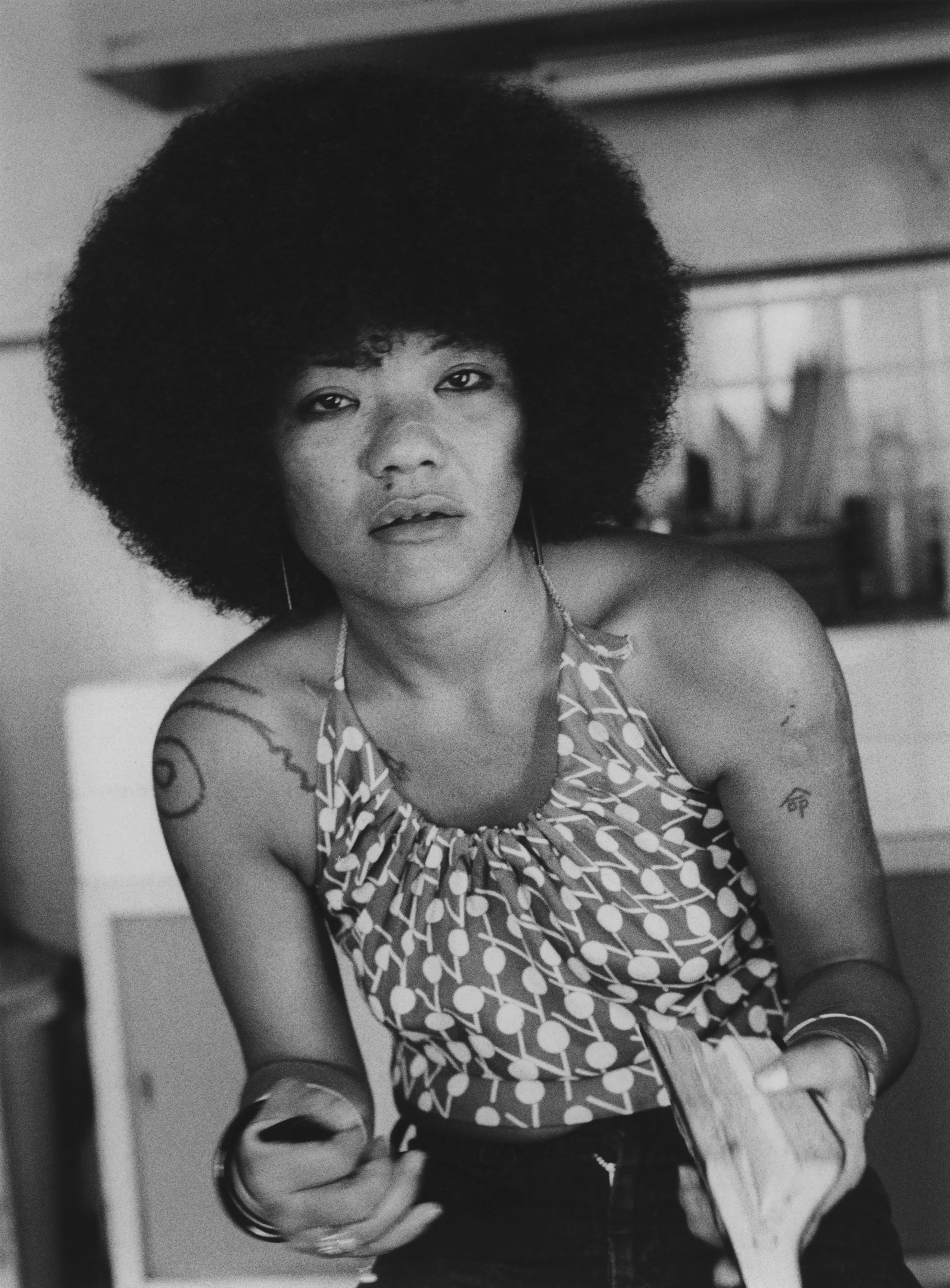 |
| Hara Mikiko, "Untitled," 1996 Exhibition page | 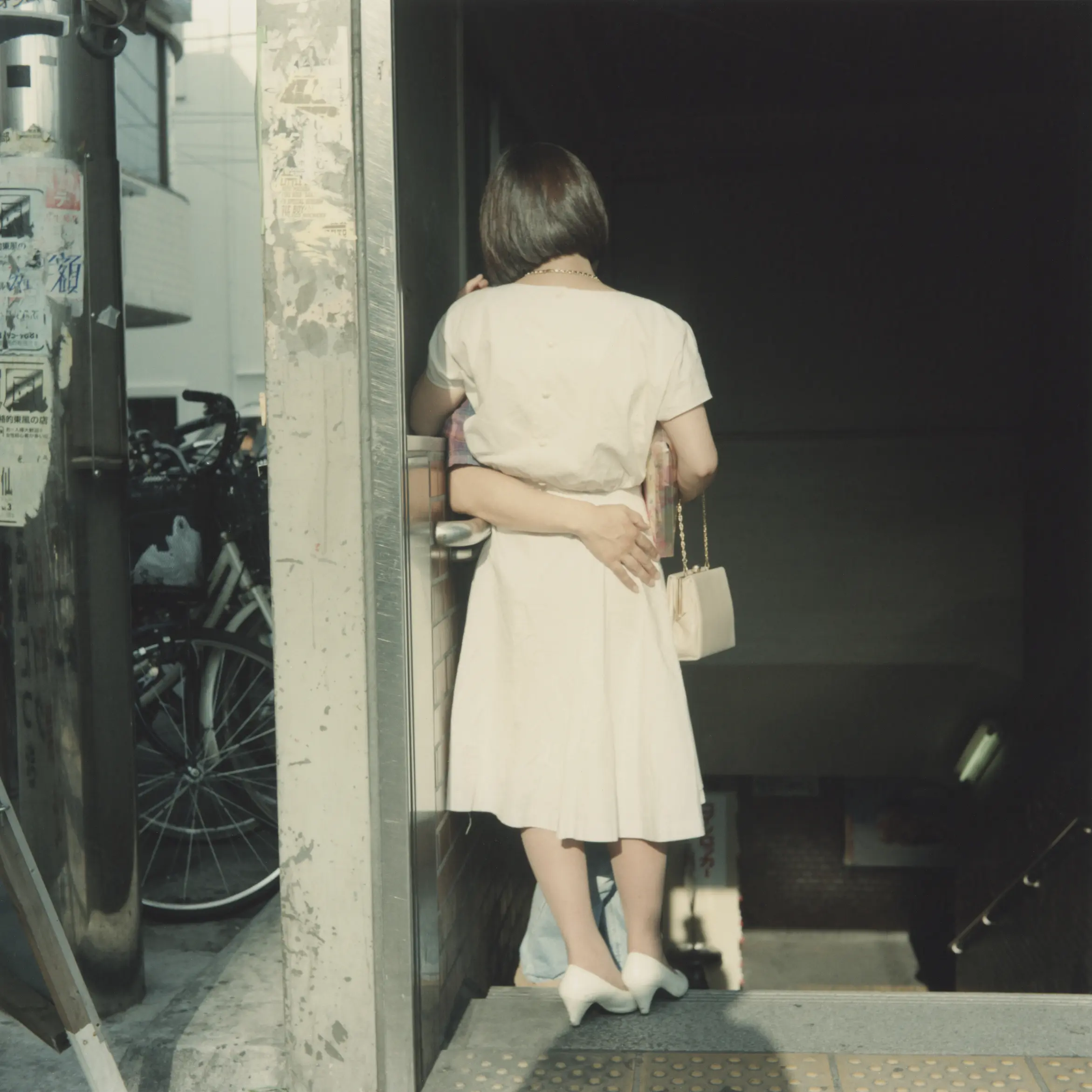 |
| Narahashi Asako, "half awake and half asleep in the water," 2003 Exhibition page | 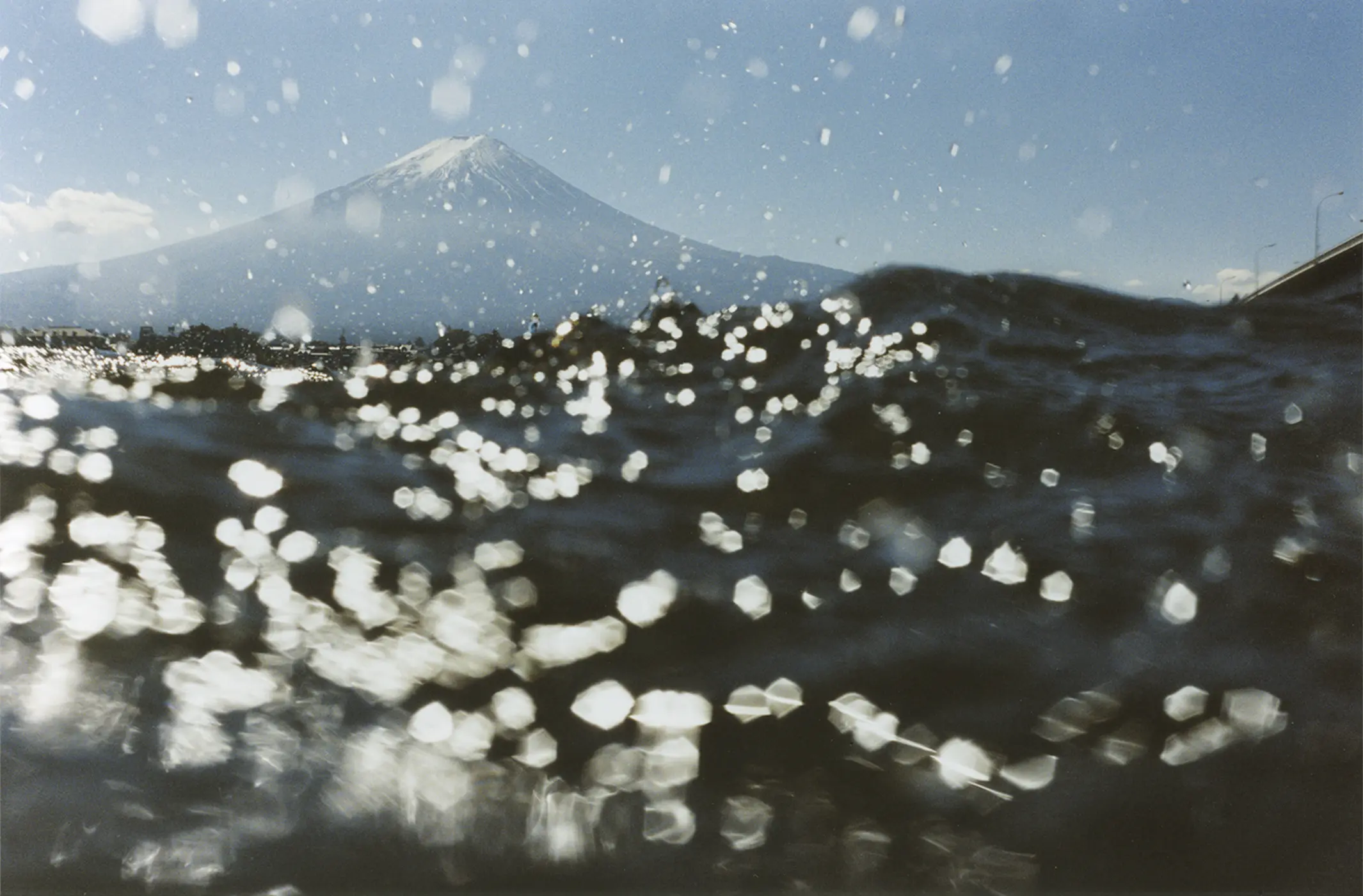 |
| Kawauchi Rinko, "Untitled" from "the eyes, the ears," 2004 Exhibition page | 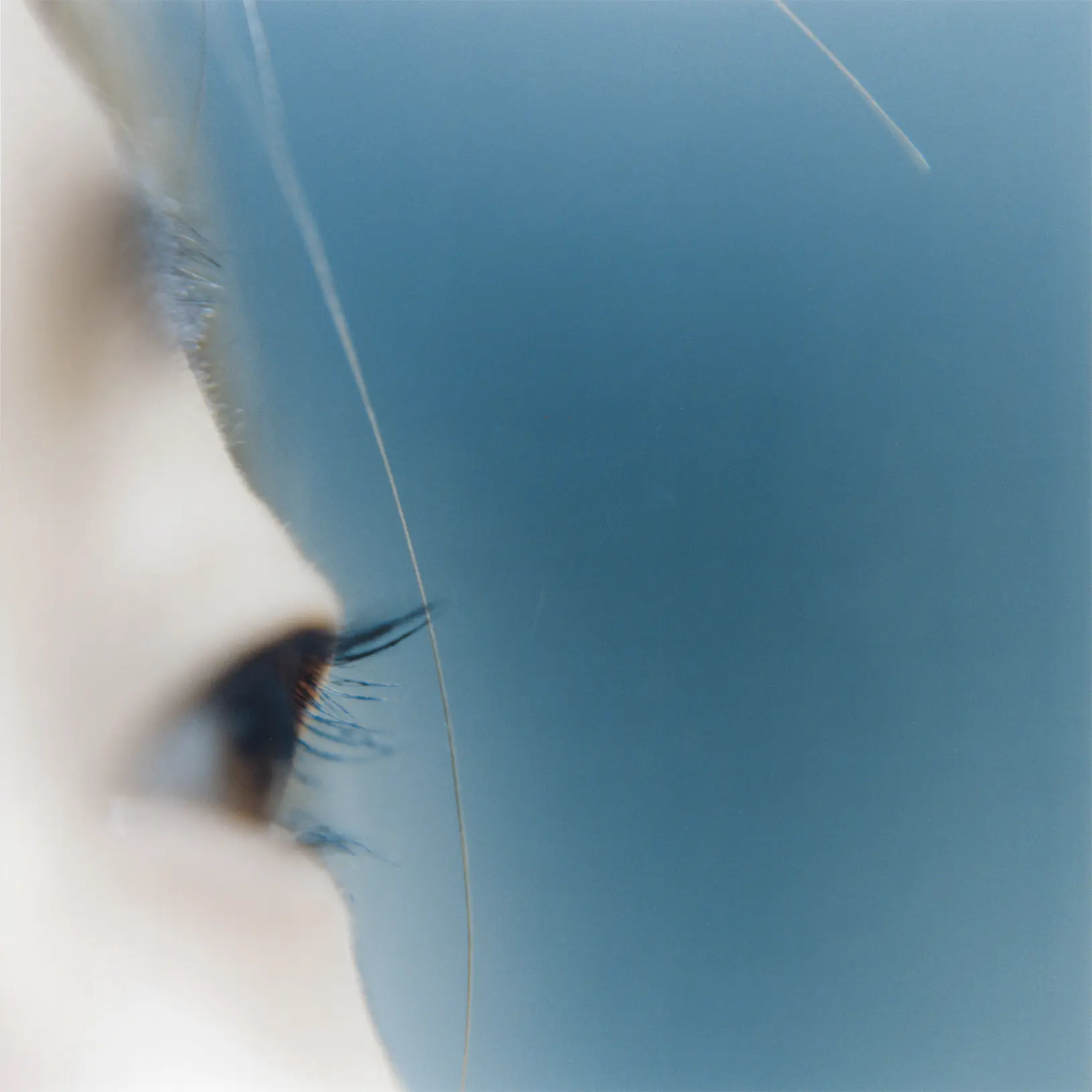 |
| Ninagawa Mika, "Untitled" from "Liquid Dreams," 2003 Exhibition page | 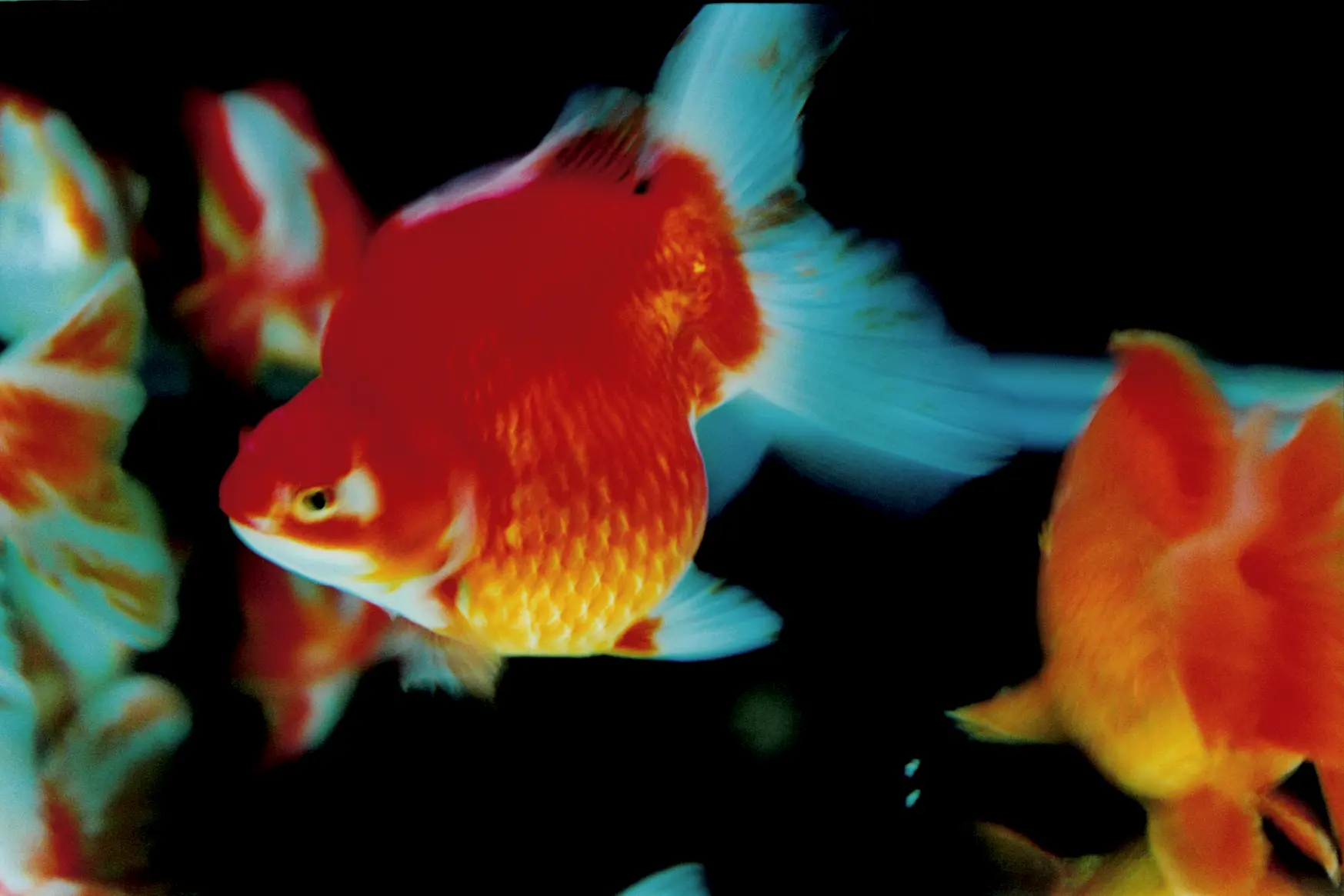 |
| Nagashima Yurie, "Full-figured, yet not full-term," 2001 Exhibition page | 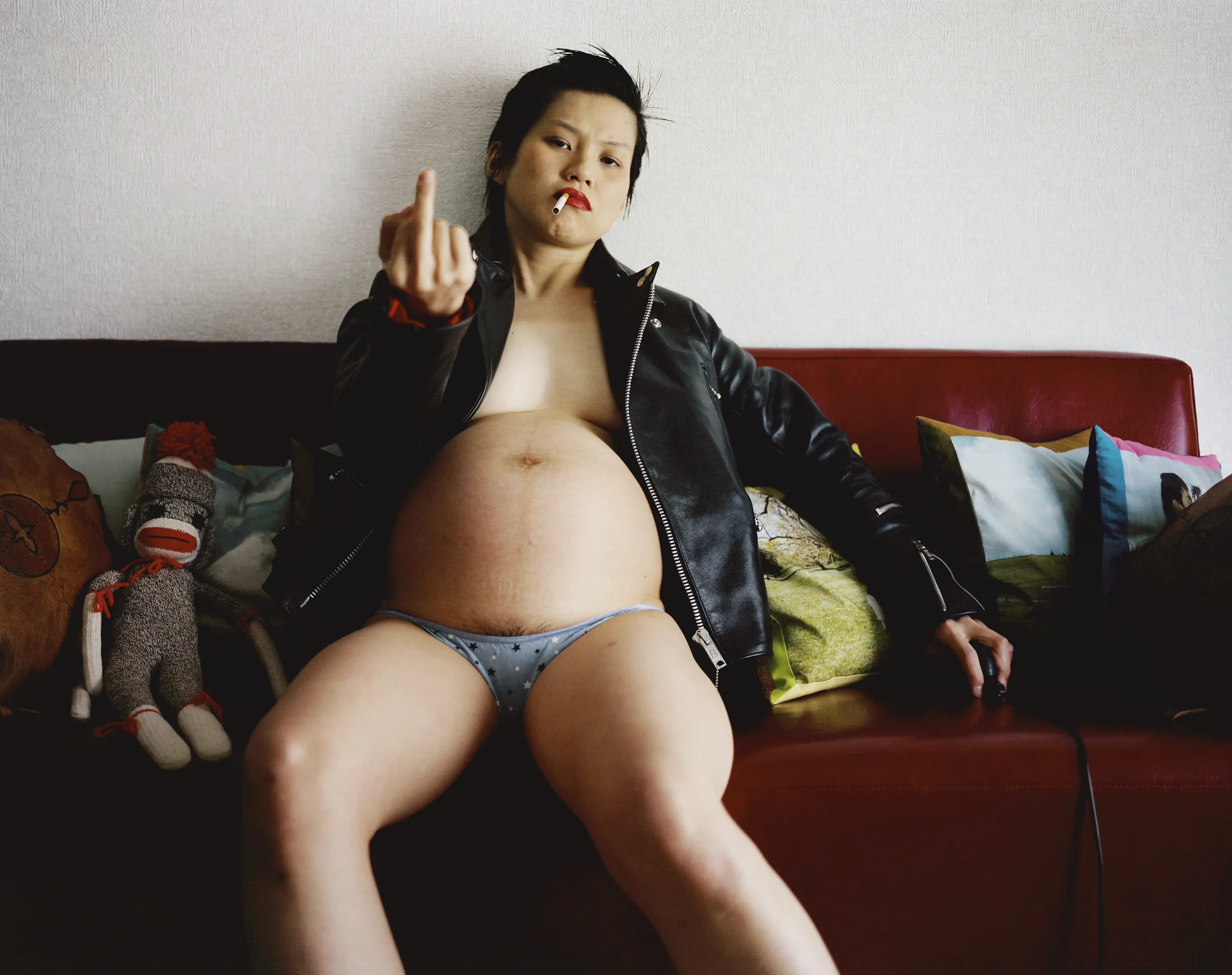 |
Even these six point in completely different directions — the record of Okinawa, the everyday snapshot, the waterline viewpoint, grains of light, saturated color, family and self. You can see at once how crude the single bracket "women's photography" is.
Why the qualifier was drawn in the first place
For a long time, Japanese photo history was told through men. This is not merely an impression; the trace is there on the institutional side too.
For instance, regarding the Kimura Ihei Award — one of the most prestigious prizes for an emerging photographer — Digital Camera World reports that only three women won it during its first quarter century. A prize is also a mirror of where the field's attention points. For a long time, women's work was not placed at the center of that attention.
The problem is not that women were not shooting. They were shooting. Exhibiting. Publishing books. And yet, in the language, prizes, magazines, and textbook lineages that tell photo history, their work was not sufficiently edited onto the side of the protagonists.
The important thing here is not to imagine only malicious exclusion. Rather, the very standard of what counted as "important photography" leaned toward a particular viewpoint. When reportage, the urban snapshot, and a rough masculine gesture were chosen as the skeleton of photo history, work that photographed the everyday, the family, the body, and the small details of life was often set aside as a "minor subject."
A guiding line is drawn to make that bias visible.
The reversal of the phrase "girl photography"
One phrase symbolizes that bias: "girl photography" (onnanoko shashin).
At the end of the 1990s, work by HIROMIX, Nagashima Yurie, and others — lightly shot self-portraits and everyday scenes — drew attention. But as Digital Camera World also points out, at the time some of the older male generation treated that work somewhat lightly, as "girls' photography": private, trivial, carrying none of the weight of technique or photo history.
With time, though, the assessment reversed. The same article writes that this "girl photography" became, if anything, one of the pillars of contemporary portraiture that steps into the everyday. Looking back from today's visual culture, in which everyone photographs themselves and their days on a smartphone, what was then dismissed as "light" was in fact ahead of its time.
Here is a paradox common to photo history: what is dismissed as marginal later rewrites the language of the center. Nagashima Yurie went on to work that critically reexamines the very framing of "girl photography." The side that was lightly named turned around and analyzed the structure of the naming.
So this show does more than rescue forgotten artists. It quietly questions the center of gravity of photo history itself — what we take to be light, and what we take to be weighty.
Reading the 27 by generation
From here, I line up the 27 by generation. Again: this is not the exhibition's official grouping but the article's map. The artist notes stay at the level of generally known tendencies, and I try not to overstate.
The reason to arrange them by generation is simple. Trace the birth years and you see, along a timeline, that women photographers did not suddenly "appear" at one moment — they were present throughout the twentieth century.
Prewar-rooted pioneers (born 1890s–1930)
| Artist | Born | A way in |
|---|---|---|
| Yamazawa Eiko | 1899 | A Kansai pioneer who ran a studio from before the war and turned toward abstract photography afterward. She showed early on a path beyond "photography as record." |
| Okanoue Toshiko | 1928 | Photocollage and montage of the early 1950s. She cut and pasted existing printed images to assemble dreamlike pictures. |
| Tokiwa Toyoko | 1930–2019 | Based in Yokohama, a postwar documentarian who faced working women and the margins of the sex trade head-on. |
With just these three, the premise that "women were not there in the early postwar years" collapses. Abstraction, collage, and social documentary — three entirely different doorways — are already open in the immediate postwar.
The generation standing in the high-growth years (born 1940–1948)
| Artist | Born | A way in |
|---|---|---|
| Ushioda Tokuko | 1940 | Kept quietly photographing the vessels of daily life — refrigerators, bookshelves, apartment blocks. A gaze that promotes ordinary detail into subject. |
| Sugiura Kunié | 1942 | Based in New York, she explored the materiality and experiment of photography, including photograms. |
| Watanabe Hitomi | 1943 | Recorded the heat of her era and living creatures — the 1968–69 University of Tokyo protests, Shinjuku, and later monkeys. |
| Ishiuchi Miyako | 1947 | Yokosuka, scars, a mother's belongings, garments from Hiroshima. A central figure of this generation, photographing skin, memory, and the traces of time. |
| Nishimura Tamiko | 1948 | Shot the city and existence itself in the rough, trembling snapshot idiom that followed Provoke. |
That an internationally known artist like Ishiuchi Miyako still needs the "woman photographer" category to be reexamined tells you how deep the bias runs.
A generation around subject and body (born 1953–1959)
| Artist | Born | A way in |
|---|---|---|
| Ishikawa Mao | 1953 | Long photographed Okinawa, its bases, and the people who live there. The distance and relations of an insider enter the pictures. |
| Kon Michiko | 1955 | Builds uncanny objects from food — fish, vegetables — and photographs them. A beauty between life and decay. |
| Narahashi Asako | 1959 | Photographs the world from just at the waterline in "half awake and half asleep in the water." She turns the very height of the viewpoint into a subject. |
Between the private and the world (born 1962–1969)
| Artist | Born | A way in |
|---|---|---|
| Yuki Onodera | 1962 | Based in Paris, she asks "what is photography?" through secondhand clothes and experimental methods. |
| Yoneda Tomoko | 1965 | Makes visible unseen time — landscapes in which history and memory are submerged, text seen through a writer's eyeglasses. One of the artists added for the London show. |
| Hara Mikiko | 1967 | With a handheld snapshot, she scoops up disturbances of light and the frayed edges of the everyday. |
| Nomura Sakiko | 1967 | Darkness, male nudes, the distance of silence. I touched on her Lirio in the earlier note Reading Photobooks Again. |
| Yanagi Miwa | 1967 | Questions the construction of images of women through staged, narrative photographs such as "Elevator Girls" and "My Grandmothers." |
| Komatsu Hiroko | 1969 | Treats large prints and the darkroom as material, making installations like black masses. |
"Girl photography" and after (born 1971–1978)
| Artist | Born | A way in |
|---|---|---|
| Noguchi Rika | 1971 | Divers, Mount Fuji, the sun. She quietly suspends the very sensation of seeing. |
| Kawauchi Rinko | 1972 | Grains of light, the fine details of life and death. In Utatane and Illuminance she gave everyday light the form of a photobook. |
| Ninagawa Mika | 1972 | Saturated flowers, goldfish, the city. With excessive color as her weapon, she brings the pleasure of photography to the front. |
| Nagashima Yurie | 1973 | Starting from family, self, and the nude, she later critically reexamined the very framing of "girl photography." |
| HIROMIX | 1976 | Self-portraits such as Girls Blue. She became the face of 1990s everyday photography. |
| Sawada Tomoko | 1977 | Self-portraits in which she keeps disguising herself as her own subject, experimenting with how the image of "I" is made. |
| Tawada Yuki | 1978 | Scrapes and burns her prints. By wounding the surface of the photograph, she takes healing and disappearance as her subject. |
Part of this generation is the side that was named "girl photography" at the time, and also the side that later turned that naming inside out. This is probably one of the show's centers of gravity.
Toward the present (born in the 1980s)
| Artist | Born | A way in |
|---|---|---|
| Shiga Lieko | 1980 | Strongly binds staging to the memory of a place, as in Rasen Kaigan (Spiral Shore), made in collaboration with a village in Miyagi. |
| Okabe Momo | 1981 | Body, gender, intimacy. She photographs relations at the edge of life, at a dense distance. |
| Katayama Mari | 1987 | Self-portraits made with prosthetic legs and self-crafted objects. She takes the body itself as her subject. |
From Yamazawa Eiko's 1899 to Katayama Mari's 1987 is about ninety years. Lined up this way, "women photographers" are not an exceptional minority but a continuity as long as photo history itself.
Can we drop the qualifier anyway?
So how long is a show like this needed? Doesn't going out of the way to bracket "women photographers" instead fix gender in place? That criticism is possible too.
My view is this: the qualifier is needed until it is no longer needed.
We may drop it on the day when, without raising this category at all, Ishiuchi Miyako, Kawauchi Rinko, and Nagashima Yurie are placed at the center of photo history with the same matter-of-factness as Daido Moriyama and Nobuyoshi Araki. When the roster of Kimura Ihei Award winners is no longer skewed, and the textbook lineage naturally includes them, this exhibition format will have finished its work.
Turn it around: the very fact that the frame "women photographers' show" still carries meaning is proof that the editing of photo history is not yet finished. This exhibition makes that incompleteness visible while, at the same time, trying to hasten its end.
So it is better not to consume these 27 as "women's photography" and leave it there. Their work — abstraction, collage, social documentary, experiment, private photography, staging, the body — is far too varied to fit inside the single bracket of gender. That very refusal to fit is the best argument for dropping the qualifier.
Highlights and a checklist
For those seeing it in person and those following related information from Japan, I want to leave these viewpoints.
- See it as a continuity of generations. Rather than hunting for individual masterpieces, hold the timeline from Yamazawa Eiko to Katayama Mari in mind, and the show's intent comes into focus.
- See photobooks and video as works too. Beyond framed prints, rare photobooks and installations are included. You can confirm the importance of the book in Japanese photography.
- Make the reversal of "girl photography" an axis. Trace concretely, through HIROMIX and Nagashima Yurie, how something lightly named later rewrote the language of the center.
- Look for the refusal to fit the bracket. Abstraction, social documentary, body, staging — take the fact that it cannot be reduced to one theme as confirming material.
- Keep the related book and the venue show separate. The Aperture book (26 artists) and the London show (27 artists) differ a little. Note that this is a project that shifts by venue.