A Photobook Without Pressing the Shutter — A GoPro Beneath a Horse, Edited from 30,000 Frames
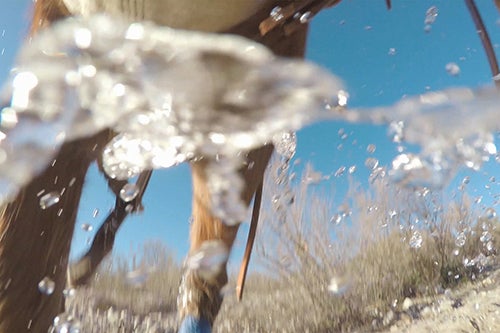
While the horse walks, the frame contains legs and dry ground. As it accelerates, gravel flies. In water, bright drops fill the image. Eventually the horse’s belly becomes a dark horizon, its legs stretch out of shape, and it is difficult to tell what we are seeing.
No one chose those instants and pressed the shutter. A GoPro kept recording while it swung beneath the belly of a horse named Tornado.
Jackie Furtado and Jennifer Haare’s photobook TORNADO began when they extracted roughly 30,000 frames from that footage and looked at them one by one. If the makers lost control while the images were recorded, who made them into a work—and where?
Scope of this article
I have not handled TORNADO. This is a pre-viewing note based on the bibliography and description published by Luhz Press, a University of Illinois interview with Jennifer Haare, and an event listing from the Center for Photographic Art (CPA).
On August 5, 2026, CPA hosted “KEEP LOOKING,” an online talk and book event with Furtado, Haare, and photography historian Kim Beil. Its page previews the discussion, but I could not find a recording or transcript published by August 11. Nothing here is presented as a statement made during that event.
The book’s structure
| Item | Details |
|---|---|
| Artists | Jackie Furtado and Jennifer Haare |
| Source footage | GoPro footage from the experimental film VALLEY FEVER, made in Arizona |
| Camera | A GoPro loosely tied beneath a horse named Tornado |
| Material | Roughly 30,000 frames extracted from the video |
| Photobook | 208 pages, 192 plates, 18 × 26 cm, softcover, with an inserted booklet |
| Publication | Luhz Press, 2025, edition of 1,000 |
| Texts | Kim Beil, “The Horse in Motion: A Tableau Vivant,” and a poetic text by Jennifer Haare |
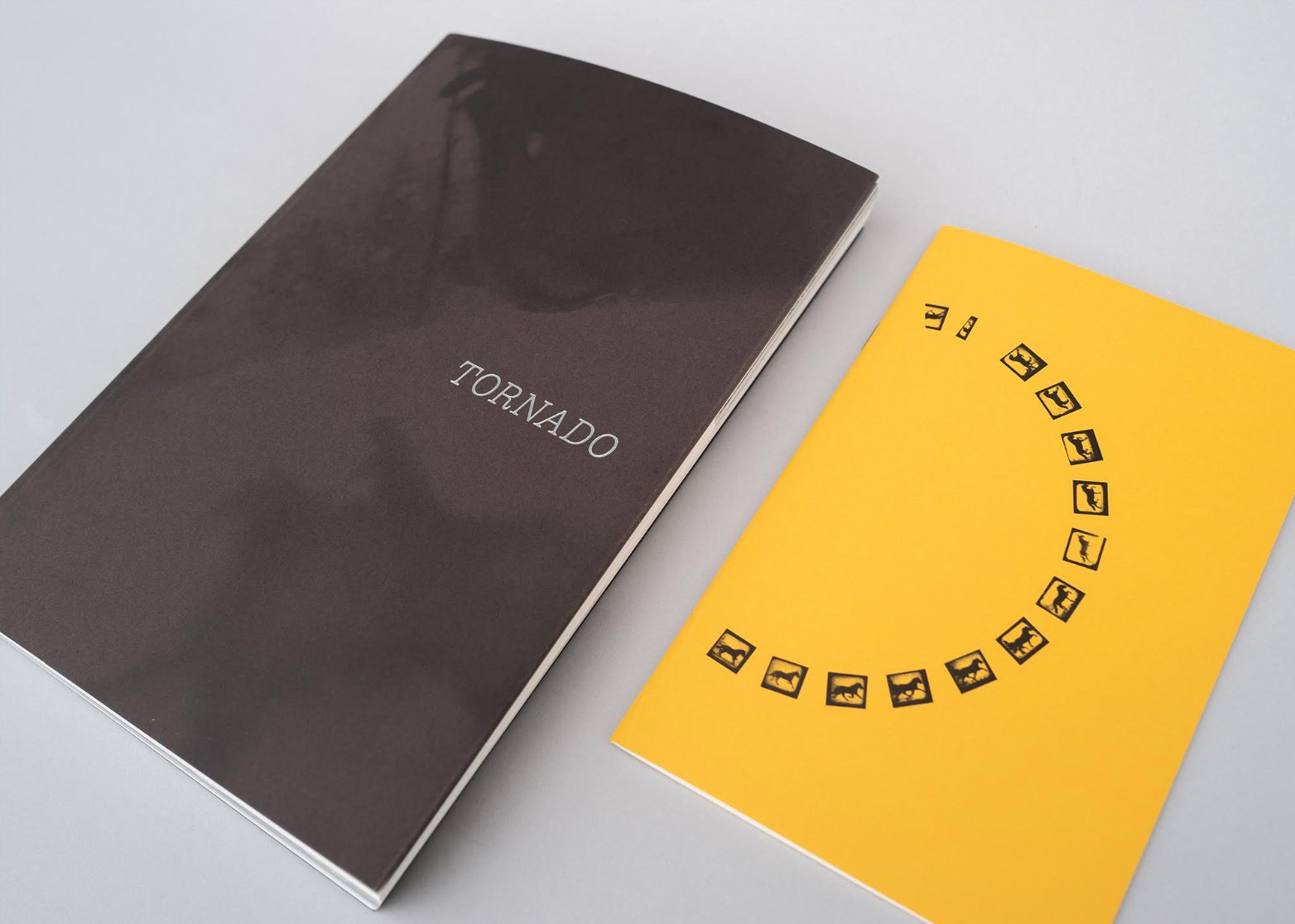
The University of Illinois article calls the project a chronophotography composed of more than 100 frames, while the publisher lists 192 plates. Public information does not explain how many distinct images appear or how repetitions and details are counted. The safest description is that more than 100 images were selected from roughly 30,000 frames and arranged across a book containing 192 plates.
The camera slipped away from its intended place
This did not begin as a planned study of equine motion.
In Haare’s account, she and Furtado were in Arizona making VALLEY FEVER, a film following a friend who worked as a farrier. They loosely attached the GoPro to a horse to add an odd passage of footage. When they reviewed it later, they noticed the disorder of the view from below, so unlike the familiar image of a mounted horse. A connection to Eadweard Muybridge’s studies of motion emerged afterward.
The work was not without intention. They chose the place, attached the camera, and began recording. What they did not control was the instant a leg crossed the frame or a drop of water covered the lens. Their plan produced the material without dictating its details.
Looking at 30,000 frames
The artists exported every frame of the video—around 30,000 images. Haare says that a narrative and sequence gradually appeared as they looked through them one by one.
If we treat 30,000 merely as the large number of choices a video provides, we make this labour sound easy. Each image has a neighbour and the difference may be slight: a leg moves a few centimetres, the density of grit changes, a drop is just about to hide the view or has just passed. Choosing one from nearly identical frames is slower than releasing a shutter.
In the article on Cartier-Bresson’s “decisive moment”, I considered the time in which a photographer recognizes relationships within the frame. In TORNADO, that recognition moves to after capture. The artists do not wait on location for a conclusive picture. They read how movement breaks apart across 30,000 images that have already passed.
Authorship has not disappeared. It has divided among the person who places the camera, the person who opens every frame, the person who discards a near-duplicate, and the person who puts the remaining images beside one another.
The pages make the horse run again
Luhz Press says the photographs move through the book in a spiral and gradually become abstract. Hooves and legs elongate, the belly becomes a dark landscape, and sand and water make pixels resemble paint. An index of timecodes at the back reportedly allows each image to be returned to its point in the original video.
A video plays at a fixed speed. A reader can pause, go back, or turn several pages at once. The body turning paper, rather than the source frame rate, sets the horse’s speed. Stills extracted from a moving image become a different motion on the page.
This resembles the approach in the article on rereading photobooks: reading an order rather than searching only for a single masterpiece. In TORNADO, order does more than explain a subject. It rebuilds the duration of the run.
This is also the part that must be tested with the object in hand. Without knowing the resistance of the paper, how the binding opens, the space across spreads, or how 192 plates repeat, I cannot claim that the book feels fast. Whether a reader’s hand experiences the spiral and abstraction described by the publisher remains unverified.
Moving in the opposite direction from Muybridge
Luhz Press and CPA position the work as a contemporary rereading of Muybridge’s motion studies.
Both break movement into sequential images. They differ in what that breakdown is meant to reveal. In the publisher’s account, Muybridge used photography’s realism as evidence of truth. TORNADO, by contrast, finds the horse’s freedom and movement most visible when the GoPro loses control and the image becomes difficult to identify.
That contrast is the work’s own argument, not a conclusion about all photographic history. It is nevertheless an intriguing inversion of the consumer action camera’s promise. A GoPro is marketed as a way to bring back stable footage from positions a person cannot occupy. Here the cord swings, sand and water strike the lens, and the image fails. That failure refuses to make the horse obey a human point of view.
The limit of “without pressing the shutter”
The camera was, of course, operating. The GoPro recorded frames, and the artists started the video. Calling this a photobook made without pressing the shutter does not mean its makers were absent.
Nor does accident automatically make an image painterly. Most of the 30,000 frames did not enter the book. A loss of control made the material; severe selection made the work. TORNADO requires both.
For photographers who want to complete the frame at capture, this process may look needlessly indirect. It will feel even more so to anyone uncomfortable with finding meaning afterward among a mass of possibilities. For readers interested in the space between video and photography, mechanical failure, and the order of a photobook, however, it may make the photographer’s labour unusually visible.
Not pressing a shutter did not remove the photographers. It moved them from beneath the horse to a desk where they faced 30,000 images. When I see TORNADO in person, I want to know whether that movement reaches the reader’s fingers as they turn the pages.
Sources
- Luhz Press: Jackie Furtado + Jennifer Haare: TORNADO — bibliography, structure, relationship to Muybridge, and the publisher’s interpretation, checked August 11, 2026.
- University of Illinois College of LAS: A GoPro, a book, and a horse named Tornado — origin of the project, GoPro placement, extraction and selection of roughly 30,000 frames, and an artist interview, checked August 11, 2026.
- Center for Photographic Art: KEEP LOOKING — outline and theme of the August 5, 2026 event, checked August 11, 2026.